What this looks like in practice

Four programmes. Four industries. Played four ways.

From AI adoption to innovation to values. From weeks to months. From office populations to field staff who never sit at a desk. The method adapts. The result does not: behaviour that sticks.

Use cases

AI Adoption - Utility

Making Copilot the first thing people open on Monday morning.

Essent, an energy retailer, wanted Copilot to become part of how a commercial team actually worked, not a licence on a list. The programme ran three months, with around seventy assignments grouped into fifteen missions, each with its own theme: better prompting, working with data, presenting, organising your work. Five missions were released each month, so new content kept appearing on the platform without overwhelming anyone.

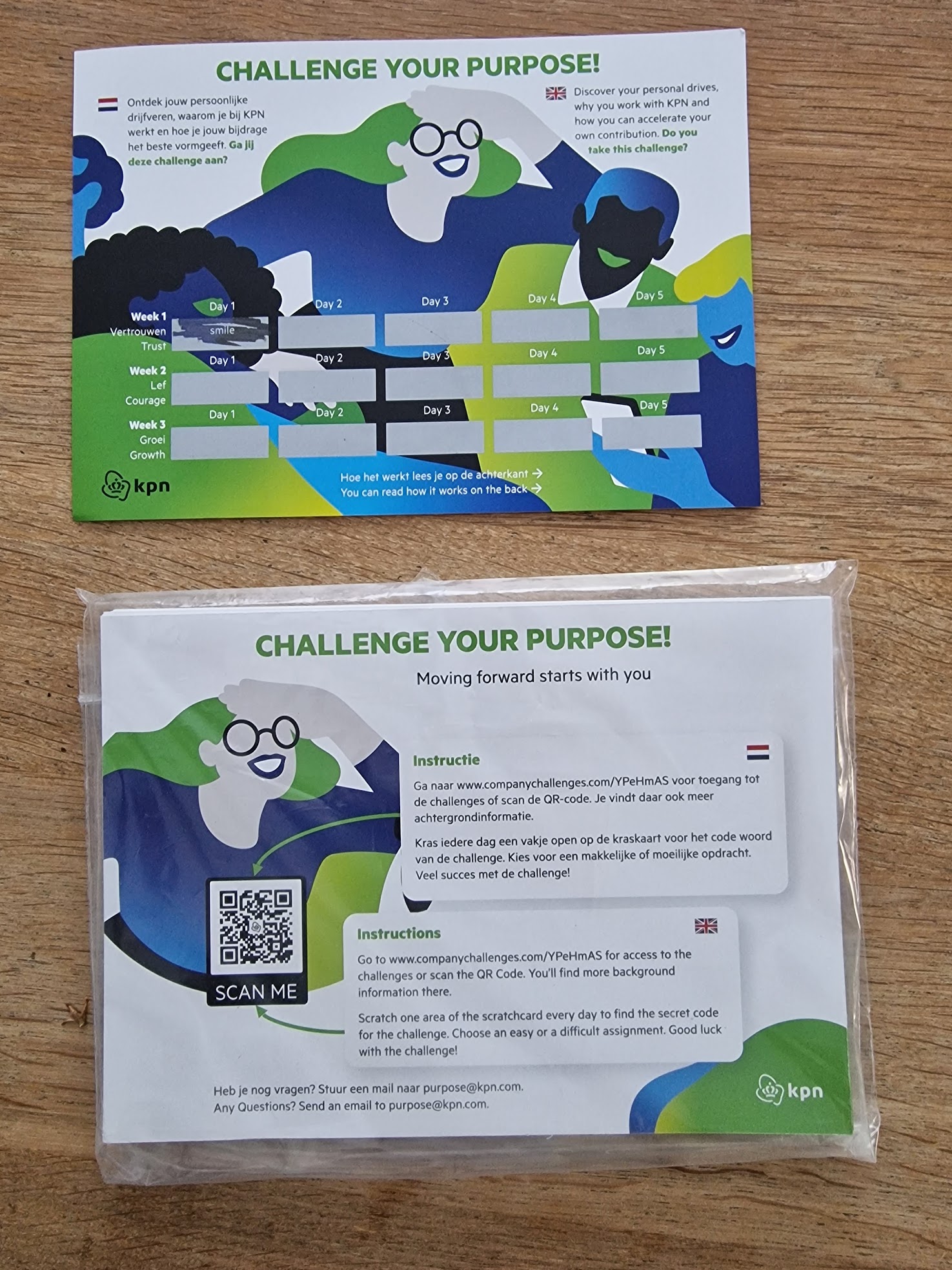
A scratch card sat on each participant’s desk, carrying the password for that mission. The card was the daily trigger: scratch, enter, start. Monthly live sessions showcased unexpected, inspiring use cases from inside the organisation, chosen deliberately to shift what people thought was possible. Alongside them, open office hours with senior experts gave participants a place to bring their own questions and go deeper on what they had tried.

The habit being built was the smallest one that matters: opening Copilot on a Monday morning without thinking about it, applied to a real task in a real inbox. Not as a pilot. Not as an experiment. As the default. The programme was successful enough that a follow-up is now being designed for the rest of the organisation.

From licence on a list to how people actually work.

AI exploration - Technology

Getting five countries to discover what AI could do for their work, together.

Barco, a global technology company that builds visualisation and collaboration systems, wanted its people to experiment with AI across their own domains. The programme ran simultaneously across five countries: Belgium, Taiwan, the United States, the United Kingdom and the Netherlands, spanning R&D, commercial and product development teams.

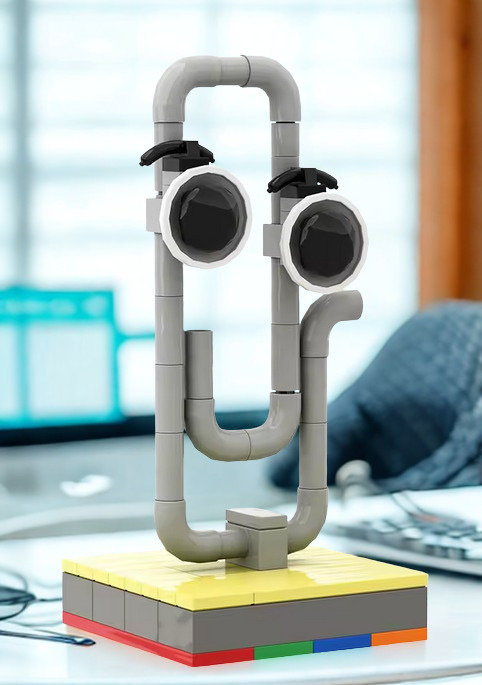
The split was deliberate: learn and practise with internal tools, discover and find inspiration with external ones, with the usual care for confidential data. Every sprint carried a contest: a real question, open to all participants, judged by peers. Winners were announced in the plenary sessions and received a physical encouragement award: a Clippy built from building blocks, the accidental mascot of everything AI-related that nobody asked for but everyone recognised. In the third sprint, each domain ran its own contest, introduced in a short video by a manager from inside that domain posing a problem they were actually facing.

The live sessions ran twice on the same day to cover thirteen time zones: a European-morning slot for Taiwan and Europe, a European-afternoon slot for the United States and Europe. Each drew over two hundred of four hundred participants. Reach per assignment hovered around twenty-five percent, which is high for a voluntary, multi-site programme.

Several contest outcomes were taken into daily processes afterwards. The programme turned AI experimentation from a private hobby into a shared practice across an entire global workforce.

From trying alone to learning together, across five countries and 13 time zones.

Innovation - Insurance

Shared thinking, before the event

Achmea, a European insurance group, ran a challenge in the run-up to an innovation network event. The brief was specific: load three innovation themes from the strategy, and teach innovation methods matched to different stages of the process. The goal was simple: arrive on the day with people who had already done the thinking, not with a room that needed warming up.

Invitees received a printed entrance ticket at home, with a tear-off stub carrying a QR code that registered them and opened the challenge in one move. Over the following weeks, sixty of eighty invitees took part in the daily assignments. Around thirty showed up to each of the expert lunches that ran alongside the challenge. Outcomes accumulated on a shared Miro board where participants could see each other’s thinking and build on it before anyone had set foot in the room.

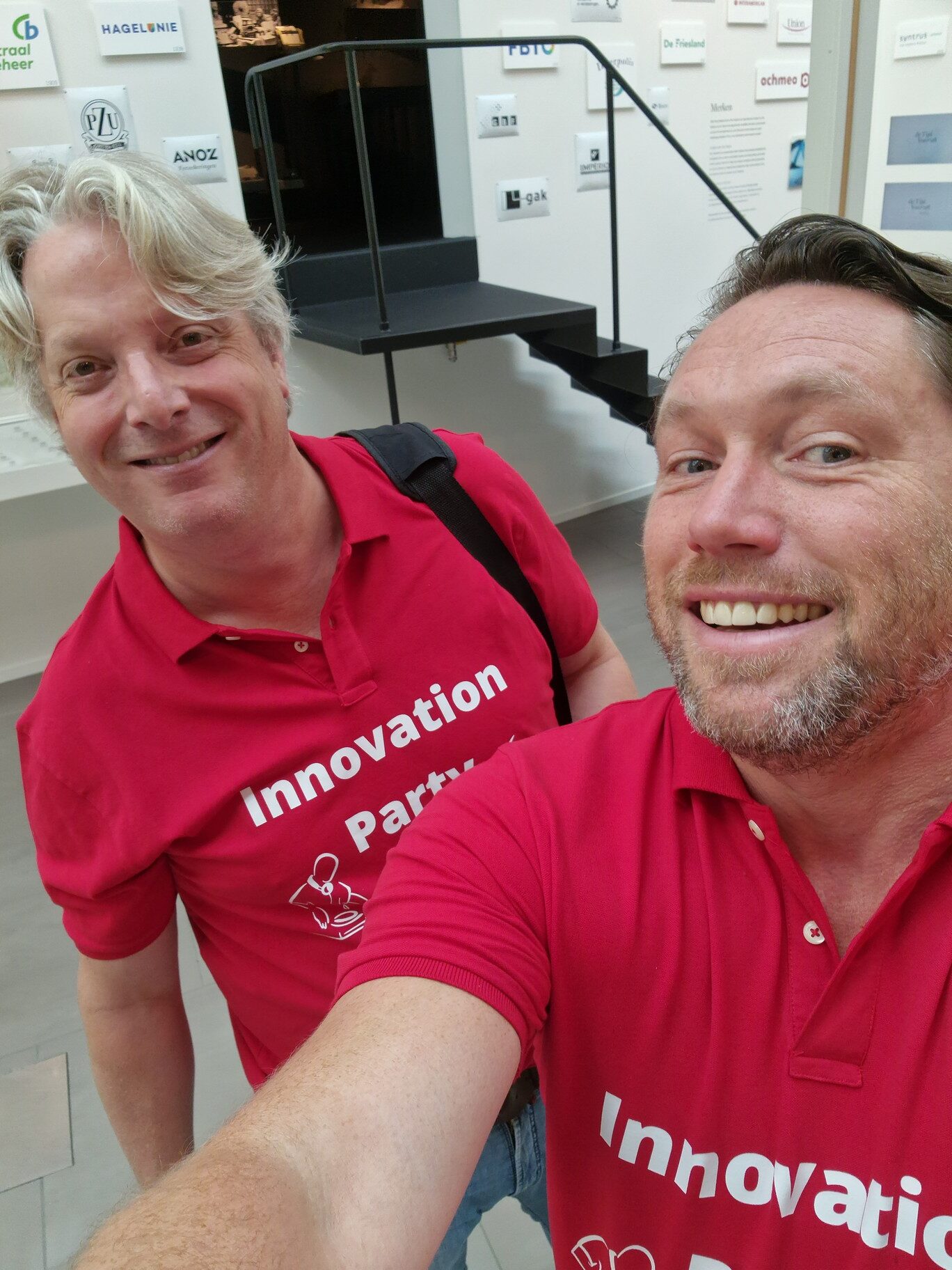
On the day itself, hosts wore Innovation DJ shirts to set a tone the audience would not have predicted from the topic. The platform ran a live sequence of assignments that took groups from theme to concrete product or service idea, judged by a live jury and capped with a pub quiz. A winning team was crowned and prizes awarded. Participants left with a set of innovation dice and a short manual as a working artefact, not a souvenir.

The habit was short and sharp: a few weeks of daily acts that built shared vocabulary, surfaced the real problems worth working on, and turned an event from a kickoff into a continuation.

The programme treated the live moment as the peak of a curve, not the start of one.

Corporate Values - Telecoms

Getting values to land with the people regular channels never reach.

KPN, a telecoms company had just defined three core values and needed them to land across a workforce of around five hundred people, including field staff and technicians who never start their day at a desk. Previous attempts by consultants and communications agencies had failed to create lasting impact with that audience.

A scratch card arriving at home was the surprise opening. The programme ran for three months, fifteen assignments in total, five per value, available in Dutch and English in parallel. The platform made the challenge doable on the road, between jobs, without a desk. Assignments were deliberately multi-modal: people took photos, picked songs, had short conversations, did things in the world rather than on a page. The programme closed with an online pub quiz.

Reach into that audience went beyond what regular internal communication had achieved on this topic. The physical layer did work that digital alone could not.

Some audiences don’t need a better message. They need a different door.

Futuring - Banking

The same platform. A completely different use.

A department within ABN AMRO Bank wanted a live summer event that felt nothing like a corporate meeting. The room was decorated for the occasion. People were encouraged to come in summer outfits. Corporate topic, non-corporate atmosphere.

The platform ran a sequence of assignments on the future of their business, driving the live experience from start to finish. Groups moved from question to concrete idea, with the orchestration sitting in the room rather than across a quarter. The event closed with a pub quiz that crowned a winning team.

No daily acts, no scratch cards. Just the platform, running a live experience from the front of a room. The same engine, a different gear.

Built for the long run. Just as sharp in a sprint.

Get in Touch